

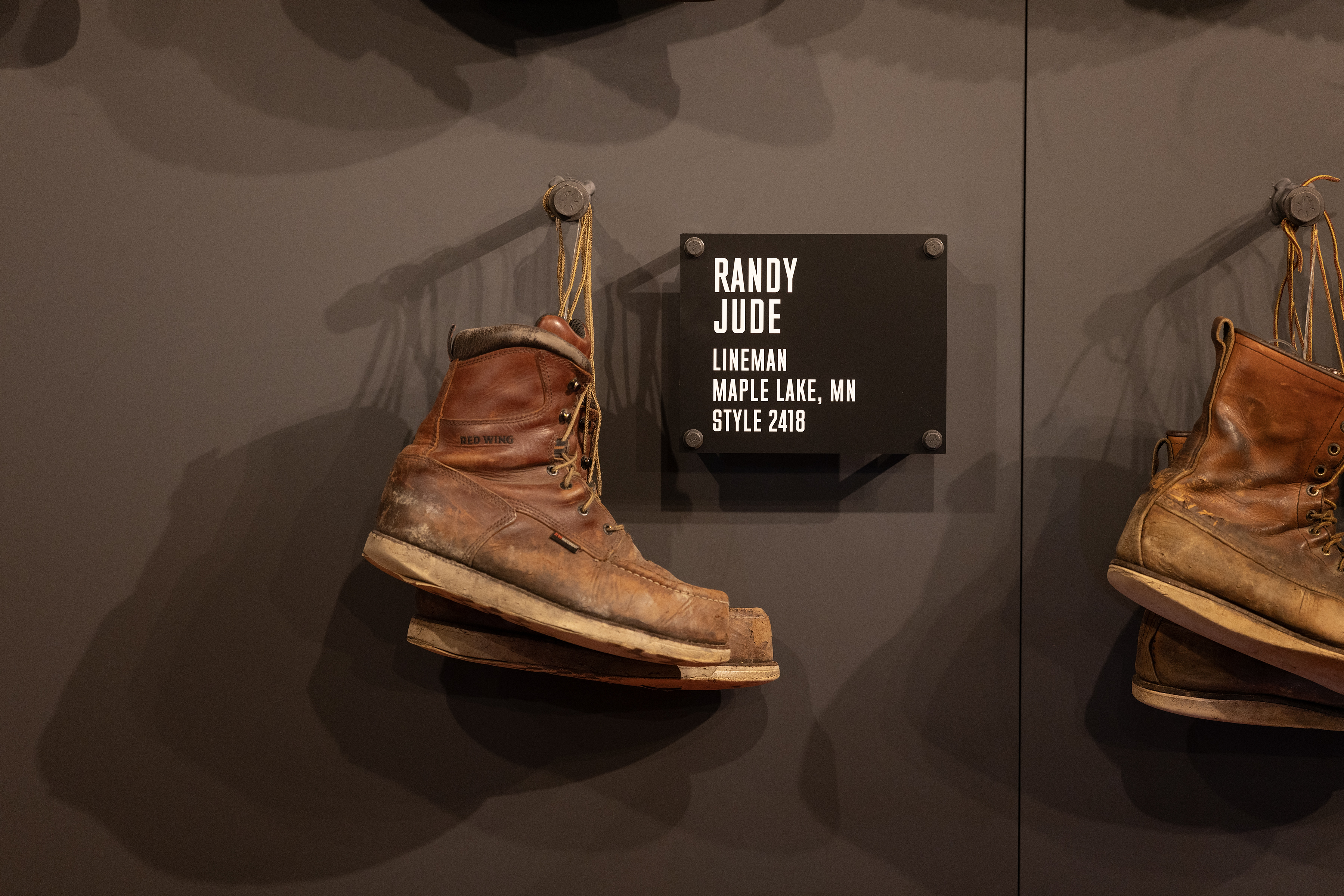
When Randy Jude hung up his boots after 40 years as a lineman for Xcel Energy, they were, by his own admission, "ready to be retired." But those boots didn't end up in a closet or a landfill; they ended up on the Red Wing Shoe Wall of Honor — a tribute that came about not because Randy sought it out, but because a family member nominated him for his tireless career serving the people of Minnesota.
Six to eight months later, Randy got the call at work that he'd been selected. The retired lineman who spent four decades braving ice storms, tornadoes and hurricanes to restore power to families across the Upper Midwest found himself at a loss for words.
"I wouldn’t have done any of this stuff if it wasn't to get the word out to the younger generation," Randy said. "There are so many potential linemen out there that don't know anything about this business. How do you know until you get exposed to it?"
‘No plans to do anything else’
For his part, Randy can’t remember a time when he didn’t know about the lineman trade. If he wasn’t visiting his dad on job sites as a kid, he was trying on his dad’s climbing hooks and scaling the basketball goal post at his family home.
“We just always knew what he did for a living,” Randy said. “I had no plans to do anything else.”
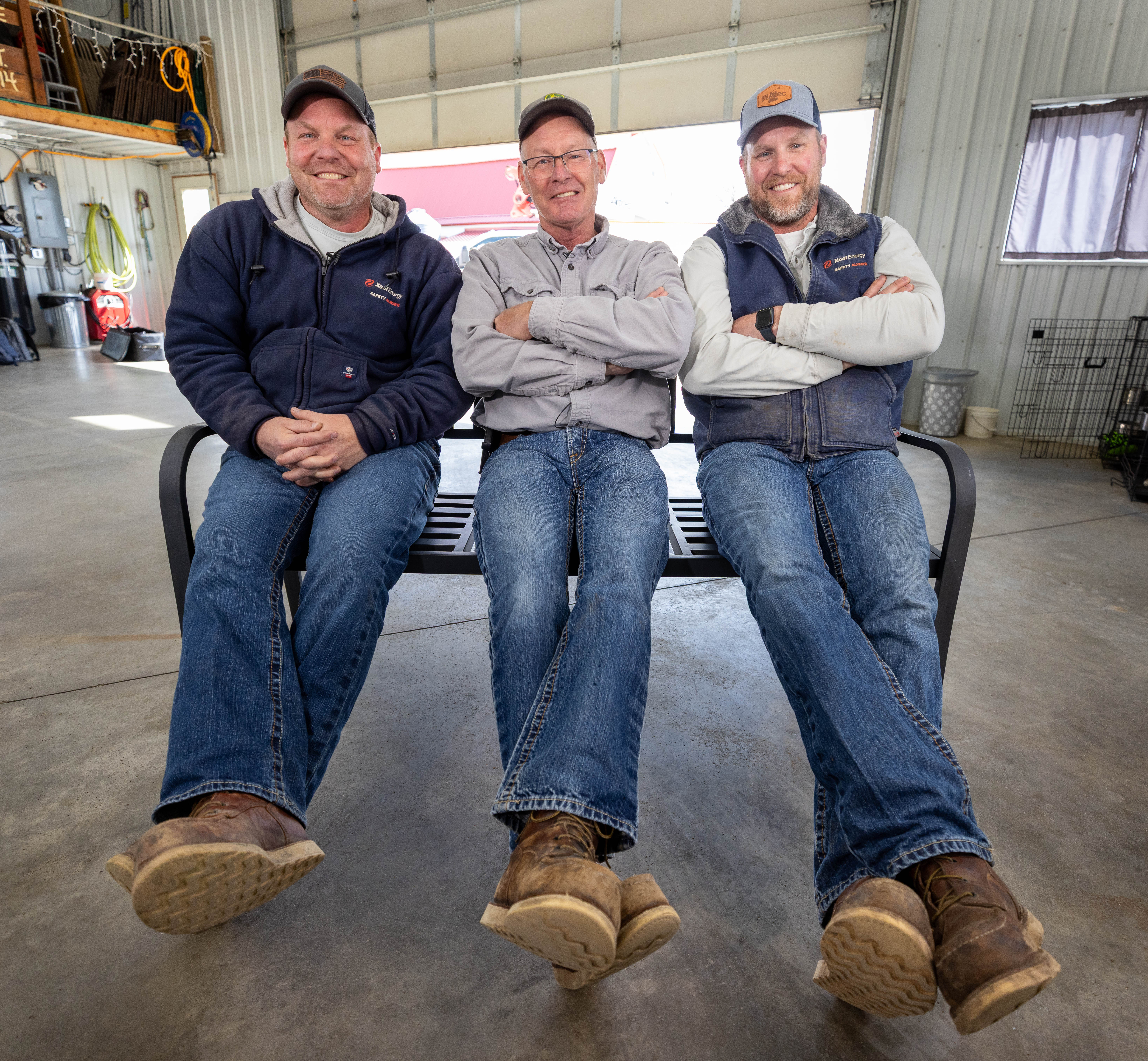
The Jude family's connection to the trade stretches back all the way to the 1940s, when Randy's grandfather was among the first crews to bring electricity to rural areas of western Minnesota. His father followed, then his father's younger brother. Randy and two of his brothers joined next. And now Randy's sons — Ryan, a lineman and substation operator, and Dustin, a troubleman — carry the family torch into the fourth generation.
"There's not too many people that can probably say that for this many generations," said Dustin. His great-grandfather got his start around the time rural electrification cooperatives were first pushing power out to the countryside.
"It was a huge deal to people," Dustin said, adding that his wife's grandmother, nearly 100 years old, still tells the story of the day a line crew pulled up to her family's yard in Buffalo, Minnesota, to bring power in for the first time. "It's kind of fun to think that my great-grandpa could have been one of the people that actually brought power to her place."
Ryan and Dustin are quick to point out that they didn't become linemen simply because their father and grandfather were.
What drew them in early was everything around the job — the equipment, the trucks, the freedom of working outdoors. As kids, they'd visit their dad on job sites, look at all the big machinery and beg for bucket rides. Randy can still recall the day young Dustin asked to try on his climbing hooks.
"They came up to here on his leg," Randy laughed, remembering how the belt was too big, so they just set him in the hooks and let him stand on the pole. “I remember that day like it was yesterday.”
A long, rewarding career
Randy joined Xcel Energy as a lineman and eventually rose to crew foreman — responsible for a group of lineworkers across a given territory. Over four decades, he worked through some of the region's most punishing storms: the 1997 Monticello tornadoes that closed roads and scattered transmission lines, ice storms in Sioux Falls and most recently, hurricanes in Florida.
"Helping get the lights back on — especially in the storms, when customers are stressed out — that's probably the most satisfying part of it," he said.
He credits Xcel Energy's culture for making 40 years not just survivable but genuinely rewarding.
"Xcel Energy has a very good reputation for mutual aid," Randy said, referring to the utility industry's practice of sending crews to assist other companies after major storms. "Xcel Energy people get the job done. They've got a really good reputation for that."
He also points to the company's safety culture as something he values deeply, especially now that his sons wear the same gear he once did. "You don't want your kids or grandkids going to work for an outfit that's not safe. That's the biggest thing."
For five of Randy's working years, he and Ryan worked on the same crew — Randy as foreman, Ryan as lineman. The dynamic worked well.
"We had the same mentality," Ryan said. "We don't want to mess around. Get it done and go to the next one."
Ryan navigated on a tablet while Randy drove the truck. When Randy couldn't find his phone, Ryan called it. "I learned a lot from working with dad over the years," Ryan said. "Great teacher. He likes to teach."
That teaching instinct runs both ways now. Randy, retired, still fields calls from his sons when they run into something unfamiliar. "Now I've got to call them and ask them questions," he said.
The trade is evolving fast — smart grid technology, shifting customer expectations — and it's the younger generation that's keeping pace. "These younger guys are a lot better with the technology," Randy said.
He imagines what his grandfather would make of it all. Would he recognize the work as it is today? "The technology part would probably be a little overwhelming for him, as it was getting for us as we were getting older,” Randy said. “But he would totally recognize it."
The family behind the family trade
There's a version of this story that focuses only on the men on the poles. But the Jude family is quick to correct that framing.
"Our wives at home — they're the rocks," Dustin said.
When storms come, lineworkers go — sometimes for a week or more at a stretch. Holidays get rescheduled. Dustin's wedding nearly went on without half his family and friends in attendance after a major storm hit days before the ceremony. "Some of them didn't make it to the ceremony," he said matter-of-factly. "It is what it is. It's part of it."
That’s the sacrifice lineworker crews and their families make for a job that is essential to our daily lives. It’s a sacrifice Randy built an entire career on and why he was such an obvious choice for the Wall of Honor at Red Wing Shoes.
Randy calls himself someone who likes to "fly under the radar." Ceremony makes him uncomfortable. But he agreed to the Wall of Honor, the interviews, the cameras, for one reason: to bring light to the importance, the pride and the benefits of the lineworker trade.
It’s a message that has passed through the Jude family for generations and continues to this day.
“It’s hard to put that in perspective,” said Dustin. “How many hours this family has put in — overall and for every storm. It’s a lot. That’s pretty cool.”