


Colorado’s energy history began with a simple question: How do you bring light and power to a rugged, fast-growing state?
The answer started in Denver. In 1869, newspaper entrepreneur William Byers, owner of the Rocky Mountain News, helped launch the Denver Gas Co. to light the city. By 1880, the Denver Gas and Electric Co. was formed, setting the stage for the electrification of central Denver and, eventually, cities including Boulder, Colorado Springs and Pueblo.
But Colorado’s most dramatic energy breakthrough came high in the San Juan Mountains. In 1891, the Ames Hydroelectric Plant opened near Ophir to supply electricity to the Gold King Mine, which sat at about 12,000 feet. The mine was struggling with the high cost of hauling fuels like timber and coal into steep, remote terrain. The new plant used water carried from Trout Lake through a pressurized pipeline to spin a Pelton wheel and generate power.
Crews hauled equipment by horse, mule and wagon through canyons and across nearly vertical slopes.
“They were battling harsh weather conditions, mountainous terrain and wildlife in the area,” said plant manager Art Steimer. “It was rough, tough work.”
Ames also helped change the future of electricity. The plant was among the first commercial systems in the country to produce and transmit alternating current electricity for industrial use, sending power 2.6 miles to the mine. At a time when Thomas Edison backed direct current and Nikola Tesla championed alternating current, Ames demonstrated that AC could move electricity more safely and efficiently over longer distances and power hard-to-reach places.
“After the success of Ames, that helped solidify AC as the industry standard in the whole electrification of the United States and the world,” said Rachael Storm, PHD, curator of Business and Industry at History Colorado.
By the 1920s, electricity was moving from mines and city centers into homes, replacing gas lighting and changing daily life. Rural Colorado took longer. The Rural Electrification Act of 1935 helped bring federal investment, and the Grand Valley Electrical Cooperative formed in 1936 to extend lines from farm to farm. By the 1950s and 1960s, Colorado had a more complete, statewide grid.
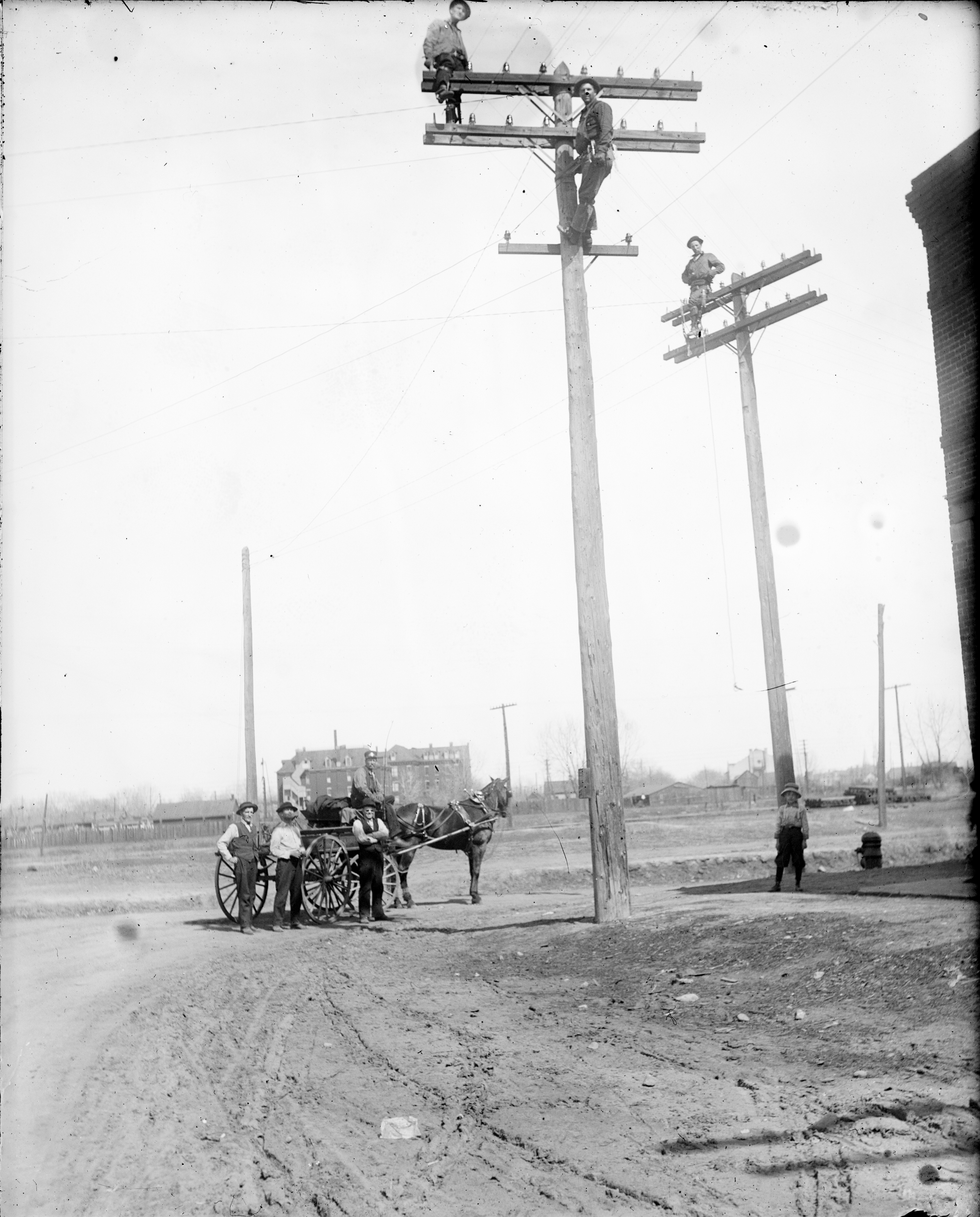
Today, that grid is evolving again. Colorado moved from one-way power delivery to a more dynamic system that can integrate wind, solar and other sources. Public Service Co. of Colorado built its first commercial wind farm in 1998, and large-scale solar followed in the 2000s.
The state’s energy story is still being written. Xcel Energy has committed to carbon-free electricity by 2050, with emerging technologies such as geothermal energy, advanced nuclear and other carbon-free resources under consideration.
The work has changed from hauling copper through mountain passes to modernizing the grid, but the purpose remains the same: powering Colorado’s communities safely and reliably for generations to come.


