

At Xcel Energy's Sherco Solar facility in Minnesota, an unusual workforce has arrived to help maintain one of the Upper Midwest's largest renewable energy projects. And they brought their appetites.
As of May, 2025, nearly 2,000 sheep call the solar installation home, providing an innovative and environmentally friendly solution to vegetation management while supporting our transition to clean energy.
Managing vegetation at solar facilities is essential for maintaining optimal performance and ensuring safe access for inspections and maintenance. Traditional methods typically involve combustion-powered mowing equipment, but Xcel Energy has partnered with Minnesota Native Landscapes (MNL) to implement a more sustainable approach at Sherco Solar.
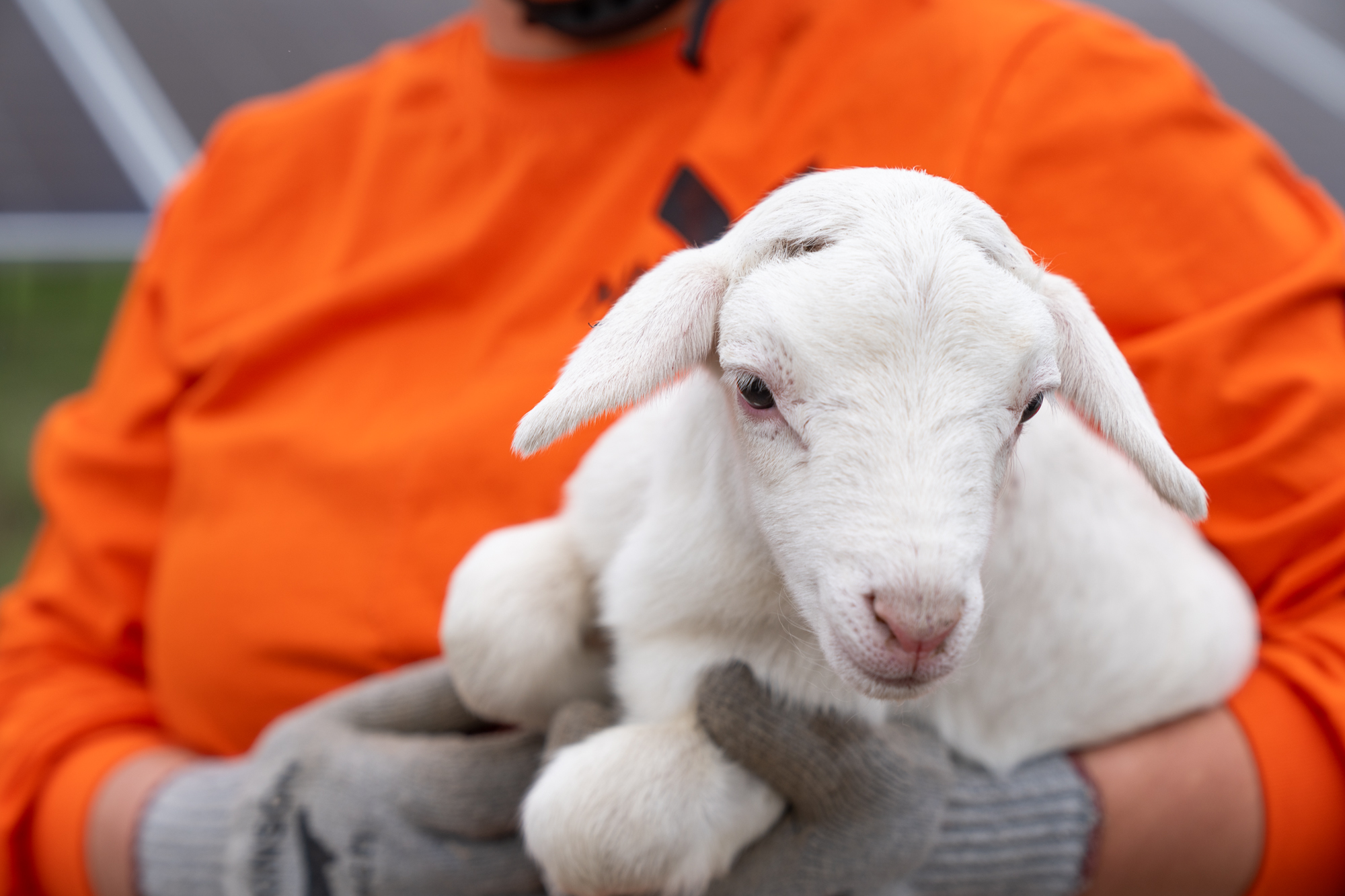
The sheep—including over 1,500 adults and hundreds of baby lambs—are raised locally in Foley, Minnesota, and are spending approximately six months out of the year grazing across different areas of the site. Protected by sheep dogs and a guard donkey, with shepherds on staff, this pastoral workforce offers multiple advantages over conventional maintenance methods.
Environmental and economic benefits
The sheep grazing program delivers significant environmental benefits that align with our commitment to clean energy, including lowering carbon emissions associated with traditional maintenance approaches. The sheep also help remove invasive plant species naturally while reducing or eliminating the need for chemical herbicides, allowing native vegetation and pollinator-friendly plants to flourish.
"Sheep are essentially the most ecologically appropriate grazing animal you could put on a solar site," said Briana Beck, the O&M supervisor at Minnesota Native Landscapes. "They fertilize the soil with their manure. There's also the thatch reduction, which is really important for the prairie and then that minor disturbance regimen that the prairie is adapted to help it regenerate. These native habitats evolved along with grazing animals; a properly managed grazing program improves the soils and improves the water quality."
The sheep grazing program at Sherco Solar showcases how traditional agricultural practices can support cutting-edge renewable energy infrastructure. By working with MNL to identify the optimal grazing approach for our specific terrain and vegetation needs, we've created a model that we continue to learn from and adapt alongside — and will carry into future Sherco Solar sites.
"When we bring on Sherco Solar 2 and Sherco Solar 3, the sheep will be grazing actively somewhere around 4,600 acres of all the vegetation," said Luke Molus, manager of operations at Sherco Solar. "To keep the native weeds down and allow the pollinator mix and the prairie grasses to grow."
From an economic perspective, sheep grazing is more cost-effective than traditional mowing methods, providing operational savings that benefit our customers while supporting local agriculture and ecological restoration businesses. The sheep grazing partnership with Minnesota Native Landscapes supports a local business while advancing innovative sustainability practices.
"It's been great working with Xcel Energy," said Beck. "There's been a lot of collaboration between the two companies to maximize the relationship and provide the right services where they're needed."
Over its 35-year operational life, Sherco Solar is expected to provide $350 million in local benefits through landowner payments, property taxes, and production taxes. The project also has generated 400 union construction jobs and will provide 18 ongoing operations and maintenance positions. Through our Power Up workforce development program, we're actively working to increase representation of women and people of color in the utility industry and building trades.
A larger clean energy vision
Sherco Solar represents a crucial component of the broader Sherco Energy Hub transformation. When fully operational in 2026, the facility's three phases will generate 710 megawatts of clean electricity—enough to power 150,000 homes across our Upper Midwest service area. This capacity directly replaces the generating capacity of the coal unit that retired in late 2023, marking a significant milestone in our journey toward carbon-free electricity.
The project exemplifies our commitment to Minnesota's goal of 100% clean energy by 2040. Solar energy provides fuel-free power generation that helps protect customers from changing fuel prices while contributing to a diversified energy mix essential for grid reliability.
For their part, the sheep seem less concerned with the fuel-free power generation the panels provide.
"So the sheep in general don't pay much attention to the panels except when it's raining or when it's hot," said Beck. "They use them to their full advantage during those time periods. They shelter from the rain or inclement weather, and when it's hot they use them for napping in the shade."